To KTH's start page

Casting and Solidification

Casting and Solidification focuses on fundamental experimental and theoretical research that is of relevance to all types of industrial casting och solidification processes.
By combining innovative experimental techniques, mathematical modelling and numerical simulation, the aims of the casting and solidification laboratory are:

  • Understanding the complex interaction of the physical phenomena – solidification, heat transfer, fluid mechanics, phase transformations, thermal stress - that occur during casting;
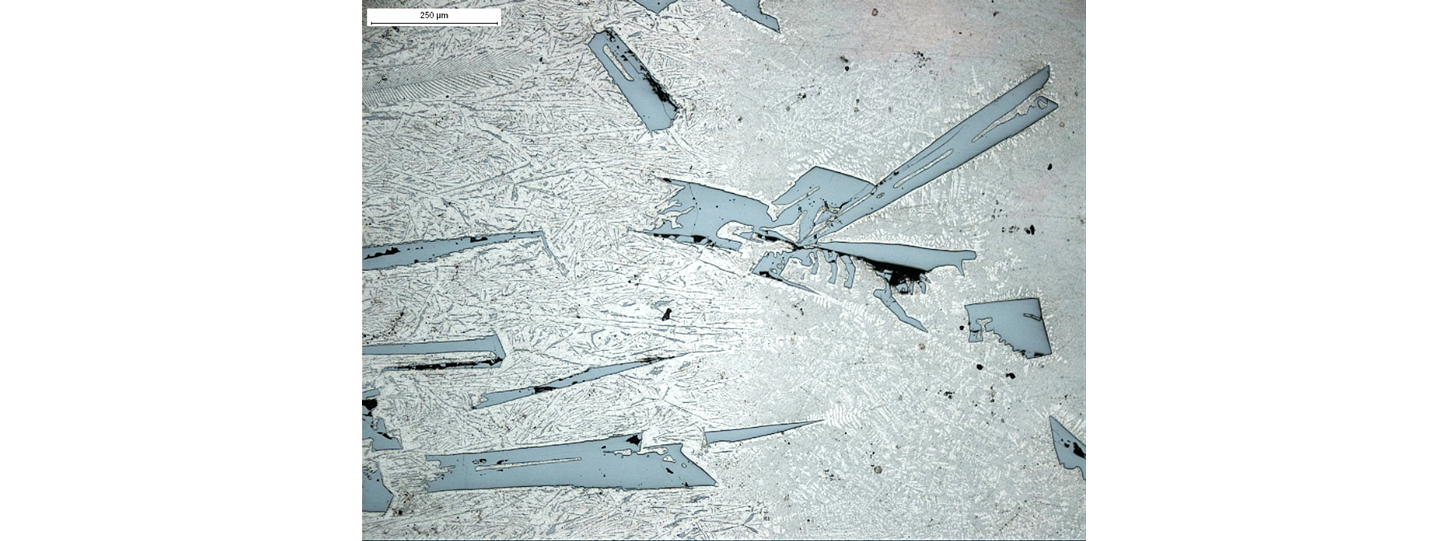
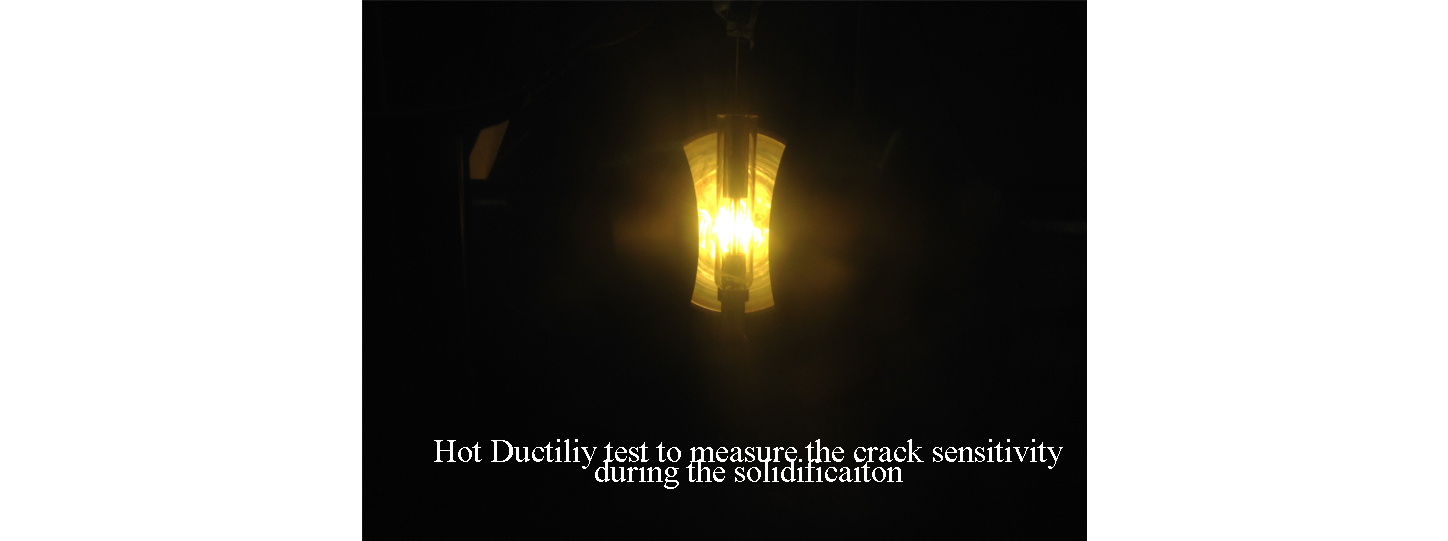
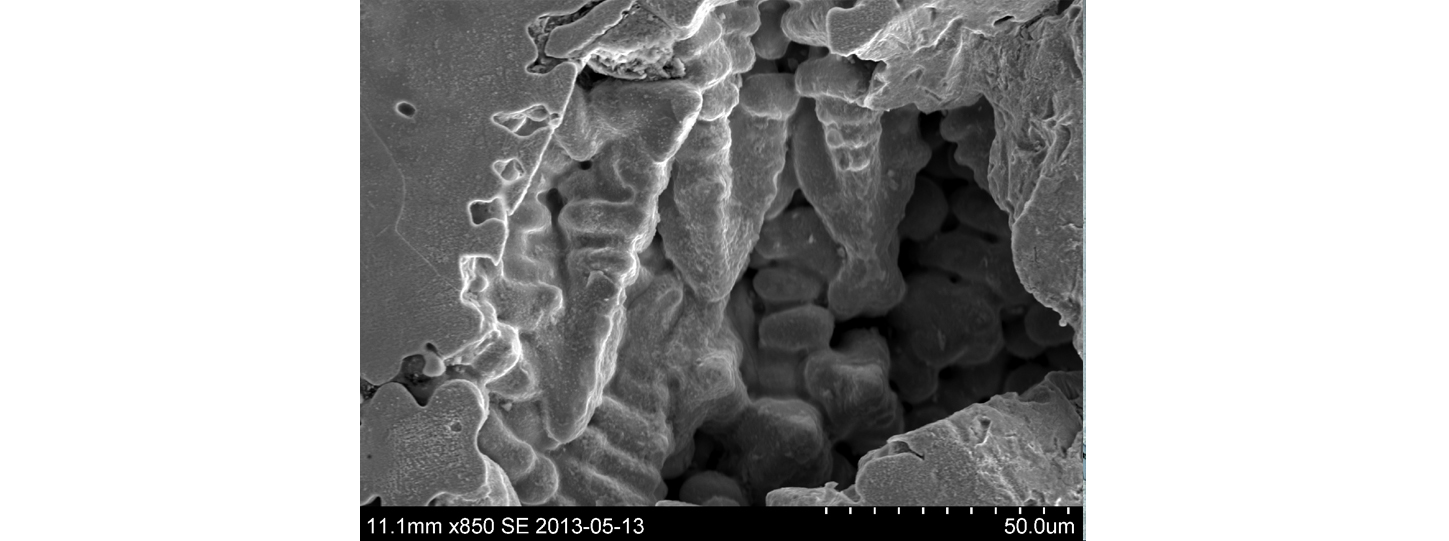
  • Addressing industrial needs to minimize structural defects – oscillation marks, cracks, tears, macrosegregations, pores, inclusions - that occur during casting;
  • Improving the design of existing casting processes, and suggesting designs for new ones.

Although the main focus is on the ingot and continuous casting of steel, other types of processes, e.g. high-pressure die casting, and other types of alloys, e.g. copper- and aluminium-based, are also considered. Moreover, and with a view to acquiring the knowledge to minimize defects in cast material still further, we seek to expand the research activities to address what happens immediately upstream and downstream of the casting process itself: melting and heat treatment, respectively.

Induction furnaces

This setup is an induction melting furnace, which was originalled designed to cast thin metal rods for performing unidirectional solidification experiments. This setup can also be used for other high-temperature experiments (maximum temperature 2000 °C) under high-vacuum or in different gas atmospheres (e.g. Ar, N2). There are three holes on the top of the furnace that can be used for temperature measurement, visual observation, and material additions. Typical experiments that can be performed in this furnace include: melting and homogenization of metals and slags, graphitization of carbonaceous materials.

Bridgman furnace

Bridgman furnace
Overall setup

This setup is known as the Bridgman furnace, a specialized experimental setup designed to achieve unidirectional solidification of metals, enabling the study of how cooling rates influence solidification microstructures (e.g., dendrite arm spacing, partition coefficients of alloying elements). The principle behind this setup is to maintain heat extraction along a single direction, ensuring that crystal growth proceeds parallel to this. Under steady-state conditions, the cooling rate (dT/dt) is given by the product of the temperature gradient (G) and the growth velocity (V). Experiments may be conducted up to 1700 °C and the cooling rate that this setup can achieve is in the range of 0.1-5 K/s. Different furnace atmospheres (Ar, N2) can be applied depending on the type of metal studied.

Bridgman schematic
Schematic of the Bridgman furnace
Columnar and equiaxed grain growth
Example of results seen in the Bridgman furace, showing columnar and equiaxed solidification growth